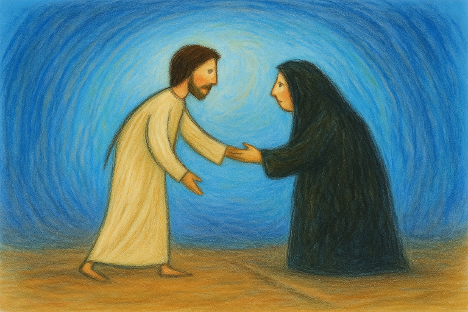
It was the Sabbath, and a woman hobbled in—bent over, her eyes fixed on the dust beneath her feet. For eighteen years she had been looking at the ground, never the faces around her. Invisible to nearly everyone, Jesus saw her true identity: daughter of Abraham, part of the covenant. As her back straightened, so did her dignity. Her healing was not just personal; it was a public challenge to leaders who valued man-made rules over God-breathed restoration. It was a visible confirmation that God desires for all of us to stand tall in our identity as God’s people. The Sabbath, Jesus insisted, was meant for setting people free.
That’s who Jesus was—he met people where they were and offered healing, transformation, and liberation from whatever stopped them from taking their place in God’s Dream for their lives. As followers of Christ, our purpose is to continue this work that promises everlasting impact.
It was Sunday, and a single mom straggled in—her nine-month-old on her hip, the three-year-old holding her hand. Isolated, overwhelmed, uncertain, and so very timid, she was welcomed as if this was exactly where she belonged. It took years to understand what this church was about. Over time, she experienced healing, transformation, and liberation in the company of friends on the same journey.
That was me. Like the bent-over woman in the synagogue, I carried burdens that kept my head down—some more visible, others less so. And like her, I was seen, called forward, and invited to stand up and claim my place in the covenant.
Liberation is never just personal—it is communal. As we stand taller, visible and unashamed, we are also called to see those still bent over under the weight of the world, to welcome them, to walk alongside them in friendship. When one person stands upright, the whole community rises a little taller—in body, in courage, and on our shared journey to participate in God’s Dream for the world.