Jesus says the kingdom of heaven is like a mustard seed. Or it’s like yeast in a baker’s bread, a precious pearl or a net full of fish.* With these simple examples, the meaning keeps sliding away, inviting me to look again with different eyes.
And why the pile-on of images? Maybe this is a summary of many metaphors used by Jesus in different settings: a mustard seed for the farming folks; a measure of yeast for women at the well; a net full of fish for the fishermen. And while we’re at it, a pearl of great price for the merchants. What is Matthew telling us about Jesus? And the realm of God?
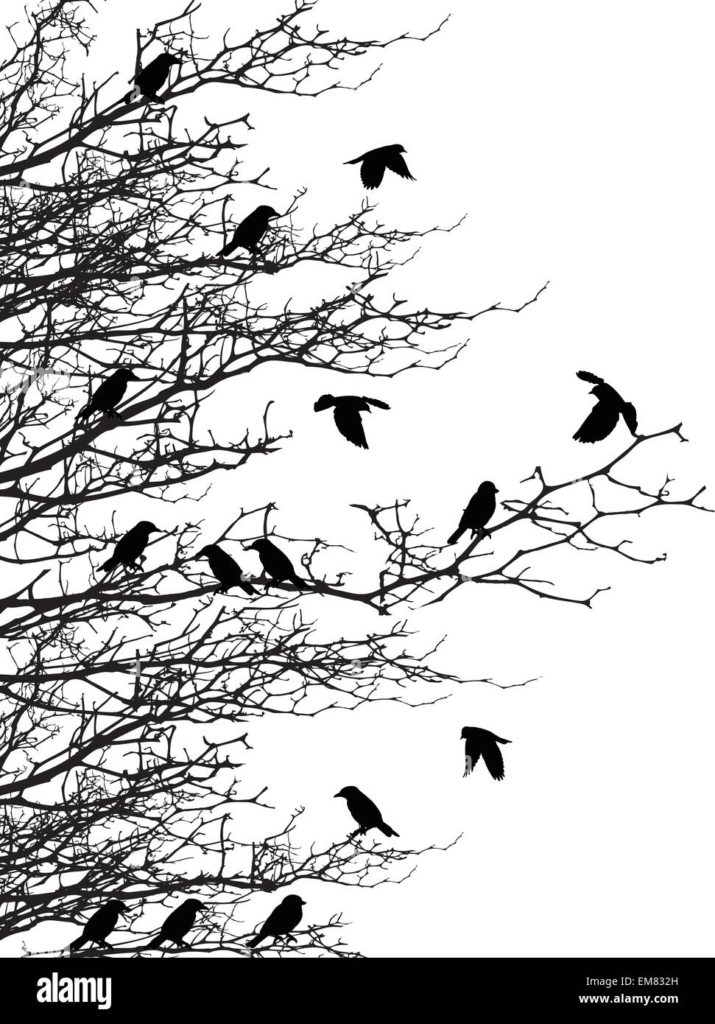
Long ago, Sallie McFague’s book, Speaking in Parables, lifted these simple metaphors into the realm of wisdom teaching for me. She posits a triangular relational structure: who’s speaking, what’s the object, and what twist is heard by the listeners. Like a poem, there is an unspoken process—how an ordinary item, like a mustard seed, becomes a shelter for birds of the air. Growth from a tiny seed to a large bush or tree takes months or years.
Becoming is the primary unspoken motif and yet it’s easy to overlook. In the text, images go from one state (seed) to another (fully grown tree). We are left to imagine the becoming. How long does it take? What about setbacks? Obstacles? Sidetracks or sabotage. Is that the realm of God? And who is this teacher? One who knows the realm of God or a charlatan, a quick-sale influencer? And do we, the listeners, settle on the promised outcome, a lush shelter, rather than the unnamed process?
So much hidden in a simple story.
- Marjory Zoet Bankson, InwardOutward Editor
For more...
For more, see Speaking in Parables by Sallie McFague (Fortress Press, 1975).